Costs & Savings

Solar Financing: Loans, Leases & PPAs

Compare solar loans, leases, and power purchase agreements (PPAs). Learn the pros and cons of each financing option to find the best fit for you.

Dr. Emily Watson
Energy Policy Researcher
Published June 10, 2025
10 min read

Overview of Solar Financing Options

You do not need $15,000 to $20,000 in cash to go solar. Multiple financing options make solar accessible to homeowners at every budget level. The three main approaches are cash purchase, solar loans, and third-party ownership through leases or power purchase agreements (PPAs).

Each option has distinct advantages and trade-offs in terms of upfront cost, long-term savings, ownership, and tax credit eligibility. Let us compare them in detail.

Option 1: Cash Purchase

Paying cash for your solar system delivers the highest total savings and the best return on investment.

How It Works

You pay the full cost of the system upfront, own the equipment, and receive all financial benefits including the federal ITC, state incentives, net metering credits, and SRECs.

Financial Example

  • System cost: $18,000
  • Federal ITC (30%): -$5,400
  • Net cost: $12,600
  • Annual electricity savings: $1,800
  • Payback period: 7 years
  • 25-year savings: $32,400 (after accounting for the initial investment)
  • Pros

  • Highest total savings over the system lifetime
  • You own the system and all incentives
  • No interest payments
  • Increases home value by the full system cost
  • Cons

  • Requires significant upfront capital
  • Money is tied up in the system until you reach the payback period
  • Opportunity cost compared to investing that money elsewhere
  • Option 2: Solar Loan

    Solar loans are the most popular financing option, combining the benefits of ownership with no money down.

    How It Works

    A lender provides the funds to purchase your solar system, and you repay the loan over 10 to 25 years with monthly payments. You own the system from day one, which means you can claim the ITC and all other incentives.

    Types of Solar Loans

  • Secured loans: Use your home as collateral, similar to a home equity loan. They offer lower interest rates (4 to 7 percent) but carry the risk of foreclosure if you default.
  • Unsecured loans: No collateral required. Interest rates are higher (6 to 12 percent) but your home is not at risk.
  • Dealer-arranged loans: Many solar installers partner with lenders to offer in-house financing. These are convenient but compare rates to ensure competitiveness.
  • Financial Example

  • System cost: $18,000
  • Federal ITC (30%): -$5,400 (applied to loan balance or kept as savings)
  • Loan amount: $18,000 at 5.5% for 15 years
  • Monthly payment: $147
  • Monthly electricity savings: $150
  • Net monthly cost: Essentially $0 from day one
  • Pros

  • No money down
  • You own the system and receive all incentives
  • Monthly loan payments are often less than or equal to your electricity savings
  • Increases home value
  • Cons

  • Interest increases total cost compared to cash purchase
  • You are responsible for maintenance (though this is minimal)
  • Loan appears on your credit report
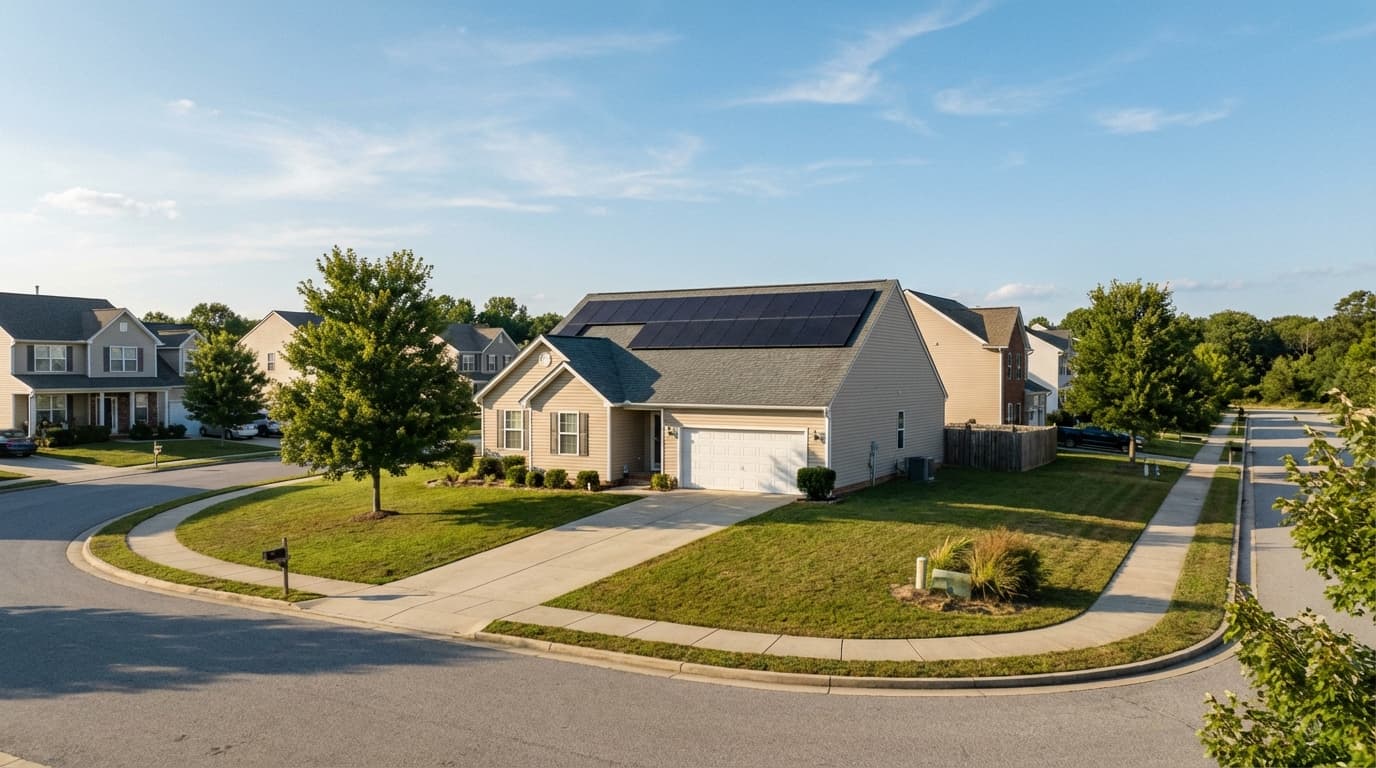
  • Residential rooftop equipped with solar panels - Solar Financing: Loans, Leases & PPAs

    Option 3: Solar Lease

    A solar lease lets you host solar panels on your roof without owning them.

    How It Works

    A third-party company installs, owns, and maintains the solar panels on your roof. You pay a fixed monthly lease payment, typically $50 to $150, in exchange for using the electricity the panels produce. The lease company claims the ITC and other incentives.

    Financial Example

  • Upfront cost: $0
  • Monthly lease payment: $100
  • Monthly electricity bill reduction: $130
  • Net monthly savings: $30
  • 25-year savings: $9,000
  • Pros

  • No upfront cost
  • No maintenance responsibility
  • Predictable monthly payments
  • Simple and straightforward
  • Cons

  • Lower total savings than owning
  • You do not receive the ITC or SRECs
  • May complicate home sales (lease must be transferred or bought out)
  • Lease payments typically escalate 1 to 3 percent per year
  • No increase in home value from the solar system
  • Option 4: Power Purchase Agreement (PPA)

    A PPA is similar to a lease, but instead of a fixed monthly payment, you pay for the electricity the panels produce at a set per-kWh rate.

    How It Works

    A third-party company installs and owns the panels. You agree to purchase the electricity they produce at a rate lower than your utility rate, typically $0.10 to $0.18 per kWh. The PPA company handles all maintenance.

    Financial Example

  • Upfront cost: $0
  • PPA rate: $0.12/kWh (vs. utility rate of $0.17/kWh)
  • Annual solar production: 10,000 kWh
  • Annual cost: $1,200 (vs. $1,700 from utility)
  • Annual savings: $500
  • 25-year savings: $12,500
  • Pros

  • No upfront cost
  • You only pay for electricity produced
  • Rate is lower than utility rate
  • No maintenance responsibility
  • Cons

  • Lowest total savings of any option
  • You do not own the system or receive incentives
  • PPA rates typically escalate 1 to 3 percent annually
  • May complicate home sales
  • Not available in all states
  • Solar panels generating clean energy under blue sky - Solar Financing: Loans, Leases & PPAs

    Side-by-Side Comparison

    | Feature | Cash | Loan | Lease | PPA |

    |---------|------|------|-------|-----|

    | Upfront cost | $12,600 (after ITC) | $0 | $0 | $0 |

    | 25-year savings | $32,400 | $22,000-$28,000 | $9,000 | $12,500 |

    | Own the system | Yes | Yes | No | No |

    | Receive ITC | Yes | Yes | No | No |

    | Maintenance | Owner | Owner | Lessor | PPA company |

    | Home value increase | Yes | Yes | No | No |

    Which Option Is Best for You?

    Choose cash if you have the savings and want to maximize your return on investment.

    Choose a solar loan if you want to own the system and receive all incentives without paying upfront. This is the best option for most homeowners.

    Choose a lease or PPA if you want the simplest possible experience with no ownership responsibilities and are comfortable with lower overall savings.

    Regardless of which financing option you choose, the first step is comparing quotes from multiple installers. SmartEnergyUSA connects you with pre-vetted solar companies who can walk you through all financing options. Get your free quote today and explore which path to solar works best for your budget.
    solar financingsolar loanssolar leasePPAzero down solar

    Ready to Go Solar?

    Get free quotes from top-rated solar installers in your area.

    Get Free Quote
    Suburban home with solar panels on roof

    Ready to go solar?

    Get free quotes from top installers in your area

    Solar powered neighborhood homes

    Start Saving with Solar Today

    Join thousands of homeowners who've switched to clean energy

    Get Your Free Quote
    30%Federal Tax Credit
    25+Year Savings
    $0Down Options