Solar Panel Lease & Rental Cost by State
Lease solar panels for $0 down and save 10-20% on your electricity bill from day one. Average monthly lease payments range from $50 to $150 for a 6kW system. Select your state below to see local lease and PPA costs.
How Much Does It Cost to Lease Solar Panels?
A solar lease lets you go solar with $0 upfront cost. Instead of buying a system outright, you pay a fixed monthly fee to a solar company that installs, owns, and maintains the panels on your roof. The average solar panel lease costs between $50 and $150 per month for a 6kW system, depending on your state and local electricity rates.
With a Power Purchase Agreement (PPA), a closely related option, you pay per kilowatt-hour of electricity the panels produce — typically at a rate 10-20% below your utility's price. Both options provide immediate savings with no upfront investment and include maintenance and monitoring for the full lease term.
Solar leasing is ideal for homeowners who want to reduce their electricity bills without the large upfront cost of purchasing a system. The leasing company claims the 30% federal tax credit and handles all maintenance, while you enjoy lower monthly energy costs from day one.
Solar Lease vs. Buy vs. PPA: Which Is Right for You?
Each solar financing option has its advantages. Here's how they compare across key factors:
| Feature | Buy (Cash/Loan) | Solar Lease | PPA |
|---|---|---|---|
| Upfront Cost | $15,000-$25,000 | $0 | $0 |
| Monthly Payment | None (or loan payment) | $50-$150/mo | Per kWh used |
| System Ownership | You own it | Leasing company | PPA provider |
| Federal Tax Credit (30%) | You claim it | Leasing company claims | Provider claims |
| 25-Year Savings | Highest ($20K-$50K+) | Moderate ($10K-$25K) | Moderate ($10K-$25K) |
| Maintenance | Your responsibility | Included | Included |
| Home Value Impact | Increases value | Minimal impact | Minimal impact |
| Contract Length | None | 20-25 years | 20-25 years |
| Best For | Max savings & ownership | $0 down, predictable cost | $0 down, pay per kWh |
Ready to go solar?
Get free quotes from top installers in your area
Highest Savings from Solar Lease
Most Affordable Solar Leases
Solar Lease Cost by State
Northeast
Southeast
Midwest
Southwest
How Solar Panel Leasing Works
Get Quotes from Solar Leasing Companies
Compare lease and PPA offers from multiple providers. Look at monthly payments, escalator rates, performance guarantees, and end-of-term options. Most consultations are free with no obligation.
Site Assessment & System Design
The leasing company evaluates your roof, sun exposure, and energy usage to design the optimal system. They handle all engineering, permitting, and utility coordination at no cost to you.
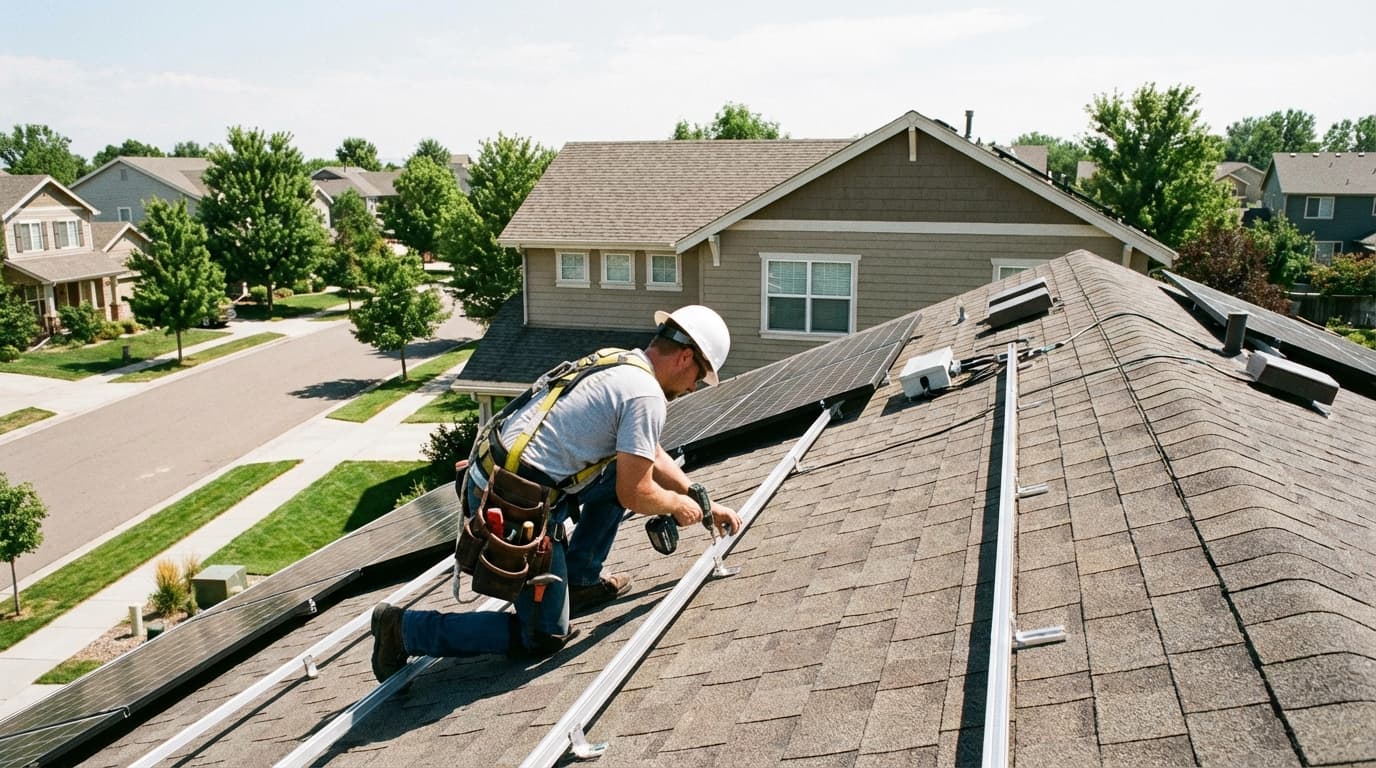
Professional Installation
Licensed installers mount the panels, connect the system, and complete the inspection process. Installation typically takes 1-3 days, and the full process from contract to activation is 2-4 months.
Start Saving Immediately
Once your system is active, you start generating solar energy and paying the lower lease rate instead of your full utility bill. The leasing company monitors performance and handles all maintenance for the life of the lease.
Top Solar Leasing Companies in the US
Sunrun
Nation's largest residential solar company. Offers leases and PPAs in 20+ states with flexible terms and a performance guarantee.
SunPower
Premium solar panels with industry-leading efficiency. Lease and PPA options available with 25-year coverage.
Tesla Solar
Competitive lease pricing with optional Powerwall battery integration. Available in most US states.
Vivint Solar
Now part of Sunrun. Known for smart home integration and flexible financing options including leases.
Palmetto
Growing national provider offering solar leases with real-time monitoring and maintenance included.
PosiGen
Specializes in making solar accessible to all homeowners, with no credit score minimums for lease qualification.
Solar Lease & Rental FAQ
Solar panel lease payments typically range from $50 to $150 per month for a standard 6kW residential system, with $0 down. The exact cost depends on your state, system size, and the leasing company. Lease payments are designed to be lower than your current electricity bill, so you start saving from day one. Some leases include an annual escalator of 1-3% that increases payments slightly each year.
With a solar lease, you pay a fixed monthly fee to rent the solar panel system regardless of how much electricity it produces. With a Power Purchase Agreement (PPA), you pay a set rate per kilowatt-hour (kWh) for the electricity the panels generate, typically 10-20% below your utility rate. Both options require $0 down, but PPAs tie your cost directly to production while leases provide predictable monthly payments. In both cases, the third-party company owns the system, claims the tax credits, and handles maintenance.
Buying solar panels (with cash or a loan) typically provides 40-70% more total savings over 25 years because you own the system, claim the 30% federal tax credit, and keep all electricity savings. However, leasing is a strong option if you want $0 upfront cost, no maintenance responsibility, and immediate monthly savings without a large investment. Leasing also makes sense if you cannot take advantage of the federal tax credit due to low tax liability. Consider your budget, how long you plan to stay in your home, and your financial goals.
When you sell your home with a leased solar system, you have three options: transfer the lease to the new buyer (most common and usually requires the buyer to pass a credit check), buy out the lease and include the system in the home sale price, or have the leasing company remove the system (this option is less desirable). Most leases include a transfer clause. Some buyers view solar as a benefit, while others may hesitate about assuming a lease. Discuss the lease terms early in the sale process to avoid complications.
One of the biggest advantages of a solar lease is that the leasing company is responsible for all maintenance, repairs, and monitoring of the system throughout the lease term. This includes panel cleaning, inverter replacement, and any performance issues. If your system underperforms, the leasing company must fix it at no cost to you. This eliminates the maintenance burden and financial risk that comes with system ownership.
No, if you lease solar panels or enter a PPA, the leasing company claims the 30% federal Investment Tax Credit, not you. This is because they own the system. However, the leasing company factors this tax benefit into your lower monthly payments. If you want to capture the tax credit yourself, you need to purchase the system outright or with a solar loan. For homeowners with low tax liability, leasing can actually be more advantageous since they wouldn't fully benefit from the tax credit anyway.
Most solar leases run for 20 to 25 years, which aligns with the expected lifespan and warranty period of solar panels. At the end of the lease, you typically have three options: renew the lease at a reduced rate, purchase the system at fair market value, or have the leasing company remove the panels. Some leases offer a buyout option at year 7 or 10. Read the lease terms carefully, particularly the escalator clause, end-of-term options, and early termination fees.
The largest solar leasing companies in the United States include Sunrun (the nation's largest residential solar company), SunPower (known for high-efficiency panels and leasing options), Tesla Solar (offers leases with Powerwall integration), Vivint Solar (now part of Sunrun), and Palmetto. Availability varies by state. When comparing leasing companies, look at the monthly payment, escalator rate, performance guarantee, maintenance terms, and end-of-lease options. Get quotes from at least two companies to compare terms.
Start Saving with Solar Today
Join thousands of homeowners who've switched to clean energy
Get Your Free Quote